Retsu Dao: The Ancient Art of Japanese Swordsmanship Reimagined
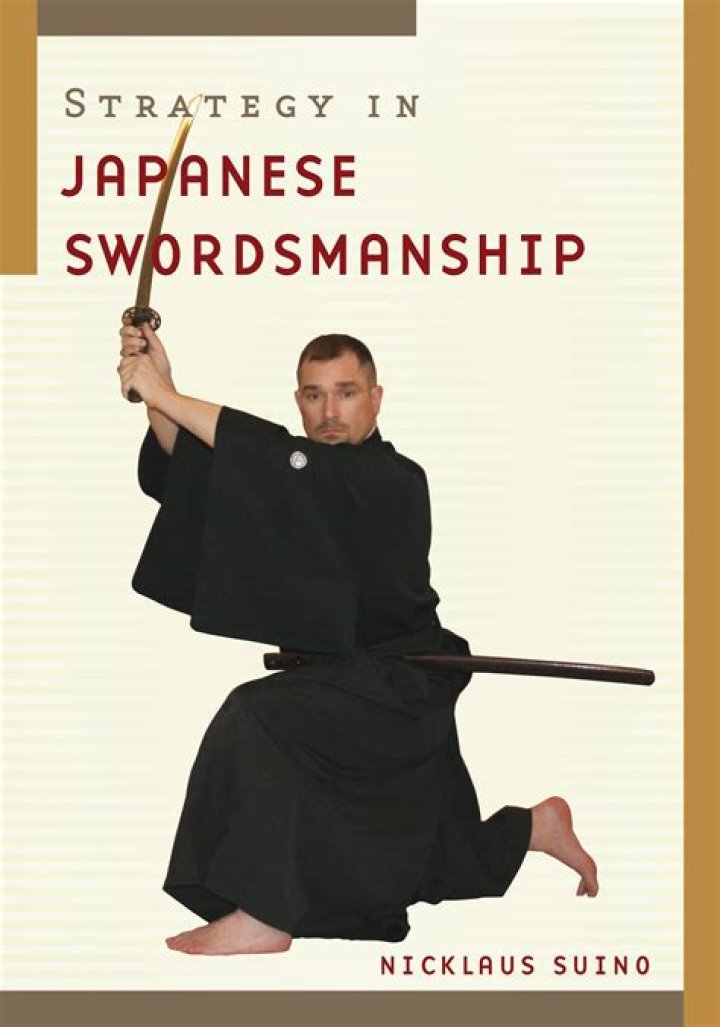
The world of martial arts is vast, filled with disciplines that span centuries and continents. But every so often, a new path emerges, one that doesn’t just repeat the past but reinterprets it for a new generation. That’s exactly what Retsu Dao represents. It’s not a relic locked in a museum. It’s a living, breathing practice. And it’s turning heads in the global martial arts community.
So what exactly is Retsu Dao? The name itself hints at its essence. “Retsu” can be interpreted as “fierce” or “intense” in Japanese, while “Dao” is the Chinese word for “the way” or “path.” Put them together, and you get something like “The Way of Intensity.” But that barely scratches the surface. This isn’t just about swinging a sword. It’s about a mindset, a philosophy, and a physical discipline that demands everything you’ve got.
Where Did Retsu Dao Come From?
Unlike kendo or iaido, which have centuries of documented history, Retsu Dao is a relatively modern creation. It doesn’t claim to be a direct lineage from a feudal-era samurai school. Instead, it draws inspiration from multiple sources. Think of it as a fusion. It takes the precision of Japanese kenjutsu, the fluidity of Chinese taijiquan, and the explosive power of modern combat sports. The result is something that feels both ancient and startlingly fresh.
The exact origins are a bit murky. Some trace it back to a small group of practitioners in Osaka in the early 2000s. Others point to a master who synthesized his training in various martial arts into a single, coherent system. What’s clear is that Retsu Dao grew organically, outside the rigid structures of traditional koryu (old schools). It was born from a desire to make swordsmanship relevant again—not as a historical reenactment, but as a practical, living art.
This lack of a single, ancient lineage might bother purists. But for many, it’s a strength. Retsu Dao isn’t bound by dogma. It evolves. It adapts. And that’s precisely what makes it so compelling in the 21st century.
The Core Philosophy: More Than Just Cutting
At its heart, Retsu Dao is about controlled intensity. It’s not about mindless aggression. Far from it. The philosophy emphasizes “metsuke”—the art of seeing without staring. It teaches practitioners to read an opponent’s intentions, to feel the flow of energy, and to strike with surgical precision.
There’s a strong meditative component too. Before any physical practice, students often spend time in seated meditation, focusing on their breath. This isn’t just for relaxation. It’s about cultivating “zanshin,” a state of relaxed awareness that continues even after a technique is completed. In Retsu Dao, the fight doesn’t end when the sword stops. The mind must remain alert, ready for anything.
Another key pillar is “kuzushi,” the concept of breaking an opponent’s balance. This isn’t unique to Retsu Dao—it’s found in judo and aikido. But in this context, it’s applied with a blade. A subtle shift in weight, a slight angle change, and suddenly your opponent is off-center. That split second of imbalance is all you need to land a decisive cut.
Techniques That Define Retsu Dao
Let’s get into the nitty-gritty. Retsu Dao’s technical repertoire is broad, but a few signature moves stand out.
First, there’s the “Retsu-giri.” This is a powerful, diagonal downward cut that starts from a high guard. Unlike the straight, linear cuts in kendo, Retsu-giri incorporates a slight rotation of the hips and shoulders. It’s not just about arm strength. It’s a full-body motion, generating force from the ground up. The result is a cut that feels almost whip-like.
Then there’s the “Hasso-no-kamae” stance, adapted from traditional kenjutsu. In Retsu Dao, this stance is held with the sword raised vertically beside the head. It’s a defensive posture, but it’s also a springboard. From here, you can launch into a thrust, a horizontal slash, or a quick retreat. It’s versatile, and it keeps your opponent guessing.
Footwork is another area where Retsu Dao shines. Practitioners use a method called “suri-ashi,” or sliding steps. Your feet never cross. They glide across the floor, maintaining a stable base. This allows for explosive forward movement without telegraphing your intentions. It’s subtle, but in a sparring match, it makes all the difference.
And let’s not forget the “Maki-otoshi,” a technique that involves wrapping your blade around an opponent’s weapon and forcing it downward. It’s a disarmament move, but it requires impeccable timing. Do it wrong, and you leave yourself wide open. Do it right, and you’ve neutralized the threat in a single, fluid motion.
Training in Retsu Dao: What to Expect
If you walk into a Retsu Dao dojo, don’t expect to pick up a sword on day one. Beginners start with “suburito,” a heavy wooden practice sword. The goal is to build muscle memory and correct form. You’ll spend hours practicing basic cuts, over and over, until they become second nature.
Conditioning is a big part of it too. Retsu Dao demands physical fitness. You’ll do bodyweight exercises, stretching, and cardiovascular drills. The idea is to build a body that can move efficiently under stress. A tired fighter is a sloppy fighter, and sloppiness gets you cut.
Once you’ve mastered the basics, you move on to “kata,” pre-arranged forms. These are sequences of movements that simulate combat against one or more imaginary opponents. Kata in Retsu Dao are shorter and more dynamic than those in traditional iaido. They emphasize speed and power, but never at the expense of control.
Sparring, or “jiyu-keiko,” is reserved for advanced students. Protective gear is worn, including a “men” (headgear), “kote” (gloves), and “do” (chest protector). The weapons are bamboo swords, or “shinai,” similar to those used in kendo. But the rules are different. In Retsu Dao sparring, strikes to the legs and arms are allowed, not just the head and torso. This makes the bouts more realistic and unpredictable.
Why Retsu Dao Is Gaining Popularity
So why is this relatively new art form catching on? Part of it is the fitness aspect. People are looking for workouts that are both physically demanding and mentally engaging. Retsu Dao delivers on both fronts. It’s a full-body workout that also sharpens your focus.
Another factor is the community. Retsu Dao dojos tend to be small and tight-knit. There’s less of the rigid hierarchy you might find in traditional Japanese martial arts. Instructors are approachable. Students help each other. It feels less like a military academy and more like a family.
There’s also a growing interest in “weapon-based” martial arts, fueled by movies, video games, and pop culture. People see a katana in a film and think, “I want to learn how to use that.” Retsu Dao offers a practical, accessible entry point. It doesn’t require years of studying Japanese language or culture. You just show up, train hard, and improve.
Retsu Dao vs. Traditional Swordsmanship: Key Differences
Let’s break down how Retsu Dao stacks up against its older cousins.
| Aspect | Traditional Kenjutsu/Iaido | Retsu Dao |
|---|---|---|
| Origin | Feudal Japan, specific schools | Modern, synthesized from multiple sources |
| Philosophy | Preservation of tradition, spiritual growth | Practical application, personal development |
| Training focus | Kata, precision, etiquette | Kata, sparring, physical conditioning |
| Equipment | Real katana (iaito), bokken | Suburito, shinai, protective gear |
| Competition | Rare, often non-existent | Common, with structured sparring rules |
| Accessibility | Requires deep cultural immersion | Open to anyone, regardless of background |
This table isn’t meant to say one is better than the other. They serve different purposes. Traditional arts are about preserving history and cultivating a specific mindset. Retsu Dao is about taking those principles and making them work in a modern context. Both have value. It just depends on what you’re looking for.
Common Misconceptions About Retsu Dao
Let’s clear up a few things. First, Retsu Dao is not a sport. Yes, there is sparring and competition, but the primary goal is not to win trophies. It’s about self-improvement. The competitive aspect is just a tool to test your skills under pressure.
Second, it’s not a “fantasy” martial art. You won’t find flashy, impractical moves here. Every technique has a logical basis. If it doesn’t work in a live sparring session, it gets discarded. This pragmatic approach keeps the art grounded.
Third, you don’t need to be a martial arts expert to start. Many beginners come in with zero experience. The system is designed to be progressive. You learn at your own pace. The only requirement is a willingness to work hard and an open mind.
How to Find a Retsu Dao Dojo
Finding a legitimate Retsu Dao school can be tricky. Because it’s not as widespread as karate or taekwondo, you might need to do some digging. Start online. Search for “Retsu Dao dojo” plus your city or region. Check social media groups dedicated to martial arts. Ask around at local gyms or community centers.
When you find a potential school, visit it. Watch a class. Talk to the instructor. Ask about their background. A good instructor will be transparent about their training and philosophy. They won’t make wild claims about secret techniques or instant mastery. They’ll tell you the truth: this is hard work, but it’s worth it.
Also, pay attention to the atmosphere. Is it welcoming? Do students seem engaged? A healthy dojo is one where people are challenged but also supported. If something feels off, trust your gut. There are plenty of good schools out there. Don’t settle for one that doesn’t feel right.
The Future of Retsu Dao
What lies ahead for this evolving art? The signs are promising. More dojos are opening in Europe, North America, and Australia. Online communities are growing, with practitioners sharing videos and tips. There’s even talk of international tournaments, though nothing is official yet.
One challenge is standardization. Because Retsu Dao is decentralized, techniques and philosophies can vary wildly from one school to another. Some see this as a weakness. Others see it as a strength—it allows for innovation. But for the art to grow, there may need to be some level of agreement on core principles.
Another challenge is recognition. Retsu Dao isn’t sanctioned by major martial arts organizations. That doesn’t stop people from training, but it can make it harder to gain legitimacy in the broader sports world. Still, many practitioners don’t care about official recognition. They’re in it for the personal journey, not the accolades.
Final Thoughts on Retsu Dao
Retsu Dao is more than just a way to swing a sword. It’s a discipline that challenges you physically, mentally, and emotionally. It demands intensity, but it also rewards patience. It’s rooted in tradition, but it’s not afraid to break the mold.
For anyone looking for a martial art that combines the elegance of Japanese swordsmanship with the practicality of modern training, Retsu Dao is worth exploring. It’s not for everyone. It’s hard. It’s demanding. But for those who commit, it offers a path unlike any other.
Whether you’re a seasoned martial artist or a complete beginner, the dojo door is open. All you have to do is step through. And when you do, you’ll find a community of people who share one thing in common: the relentless pursuit of the way.
